Theme Leader: Dr Benjamin Hirst (https://essl.leeds.ac.uk/sociology/staff/720/dr-benjamin-hirst)
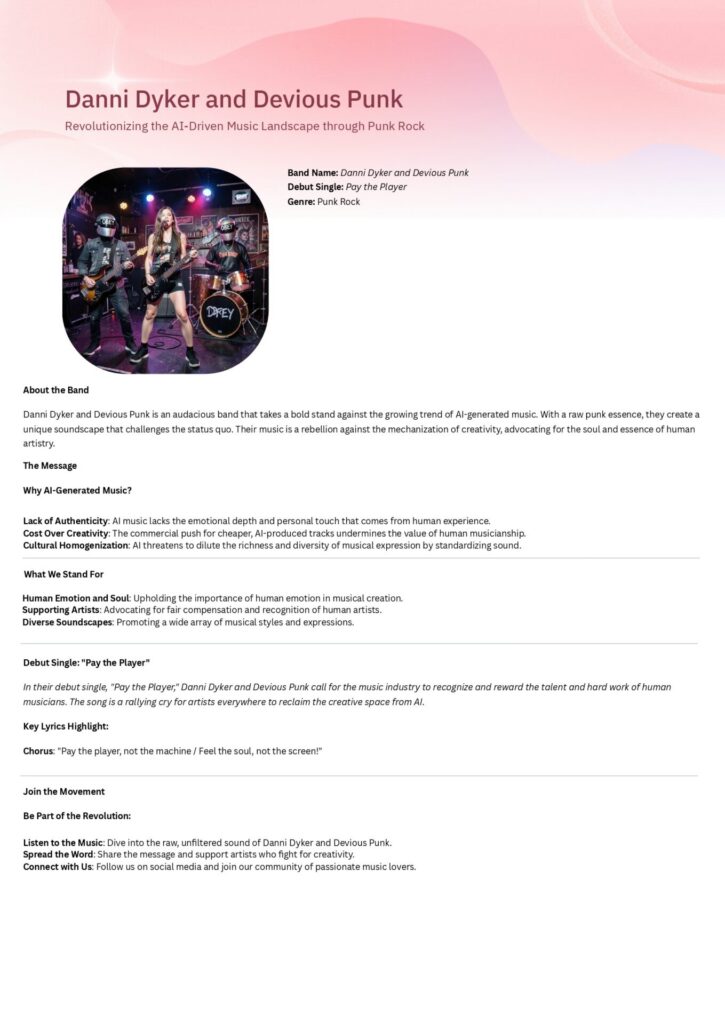
The works collected in this section explore questions about technology, creativity, labour and artificial intelligence, and consider how technological change is reshaping the ways we live and work. Together, they respond to a broader set of questions about the relationship between technology, modernity and capitalism.
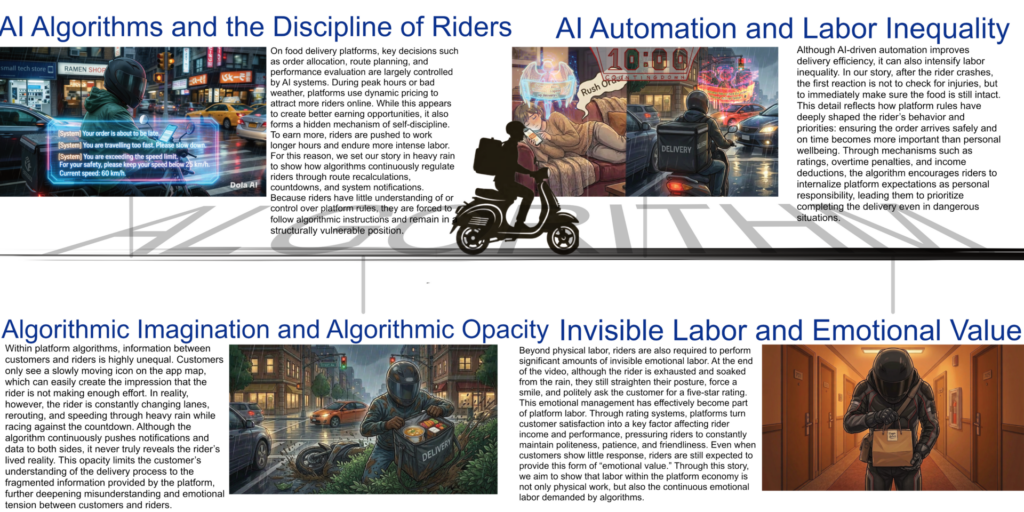
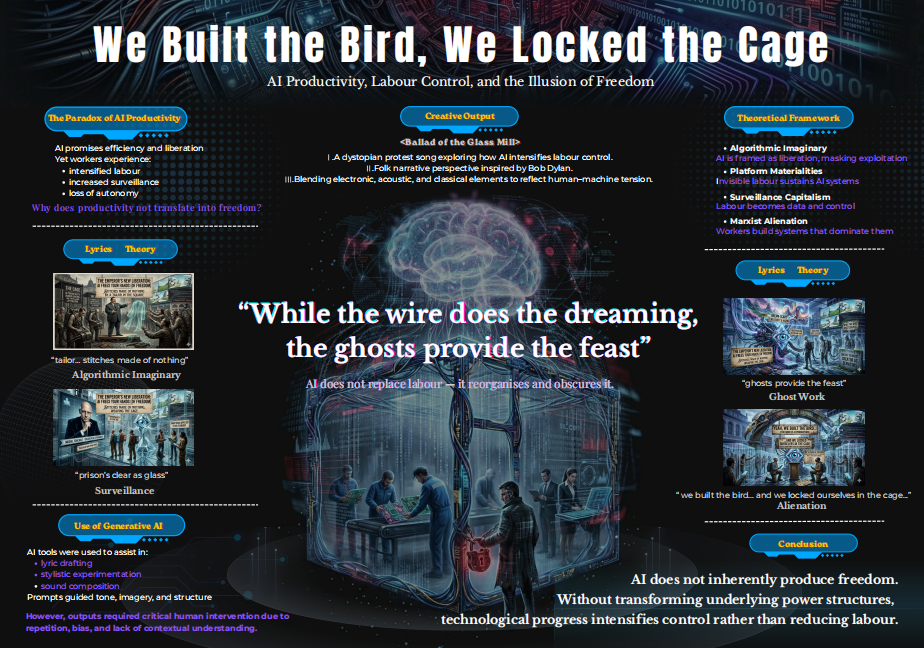
A central question from the module theme is whether automation and technological ‘progress’ genuinely reduce the drudgery associated with ‘menial’ tasks while improving the quality of our lives. Rather than simply eliminating work, new technologies often transform the nature of labour and redistribute its demands, sometimes intensifying workloads or increasing expectations. Technological progress can therefore redistribute work in ways that reproduce, or exacerbate, existing inequalities of class, race and gender.
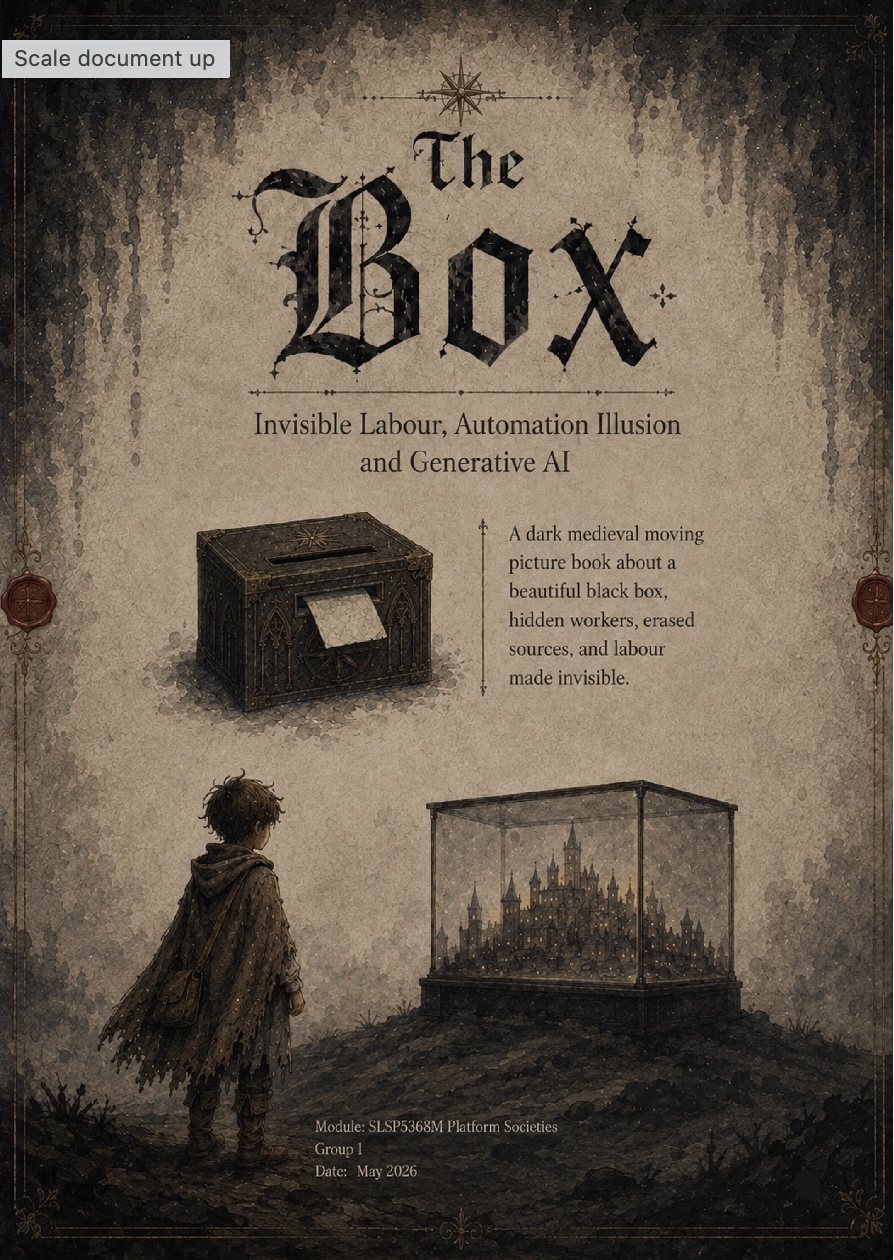
These problems remain relevant in contemporary ‘platform societies’, where digital technologies generate new forms of labour alongside the promise of automation. AI systems are often presented as autonomous or self-operating, while in practice they depend on substantial amounts of human labour (often located in the ‘Global South’). Workers label data, moderate content and train algorithms, often under precarious and poorly paid conditions. This hidden labour raises questions about who powers technological systems, who benefits from their deployment, and how the costs of technological change are distributed.
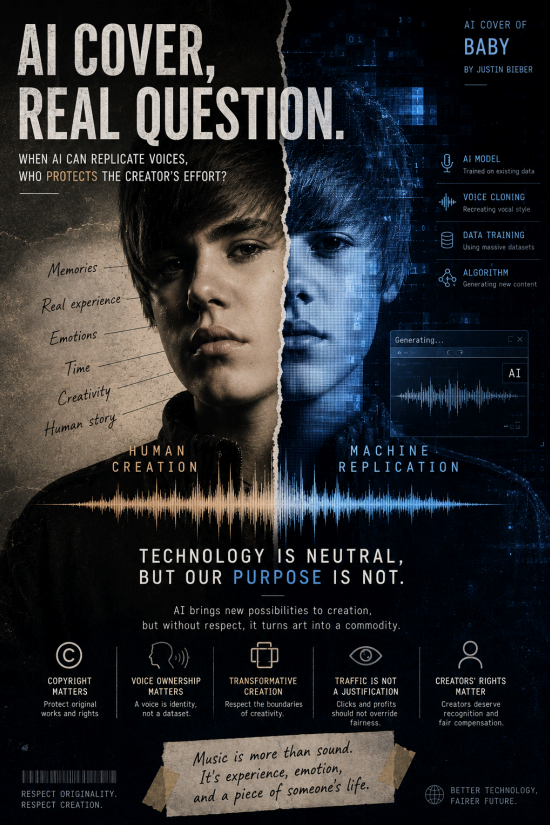
The works that follow consider these issues through a novel set of GenAI assisted ‘creative’ works, exploring automation, labour, creativity, technological change and the changing relationship between humans and machines.